
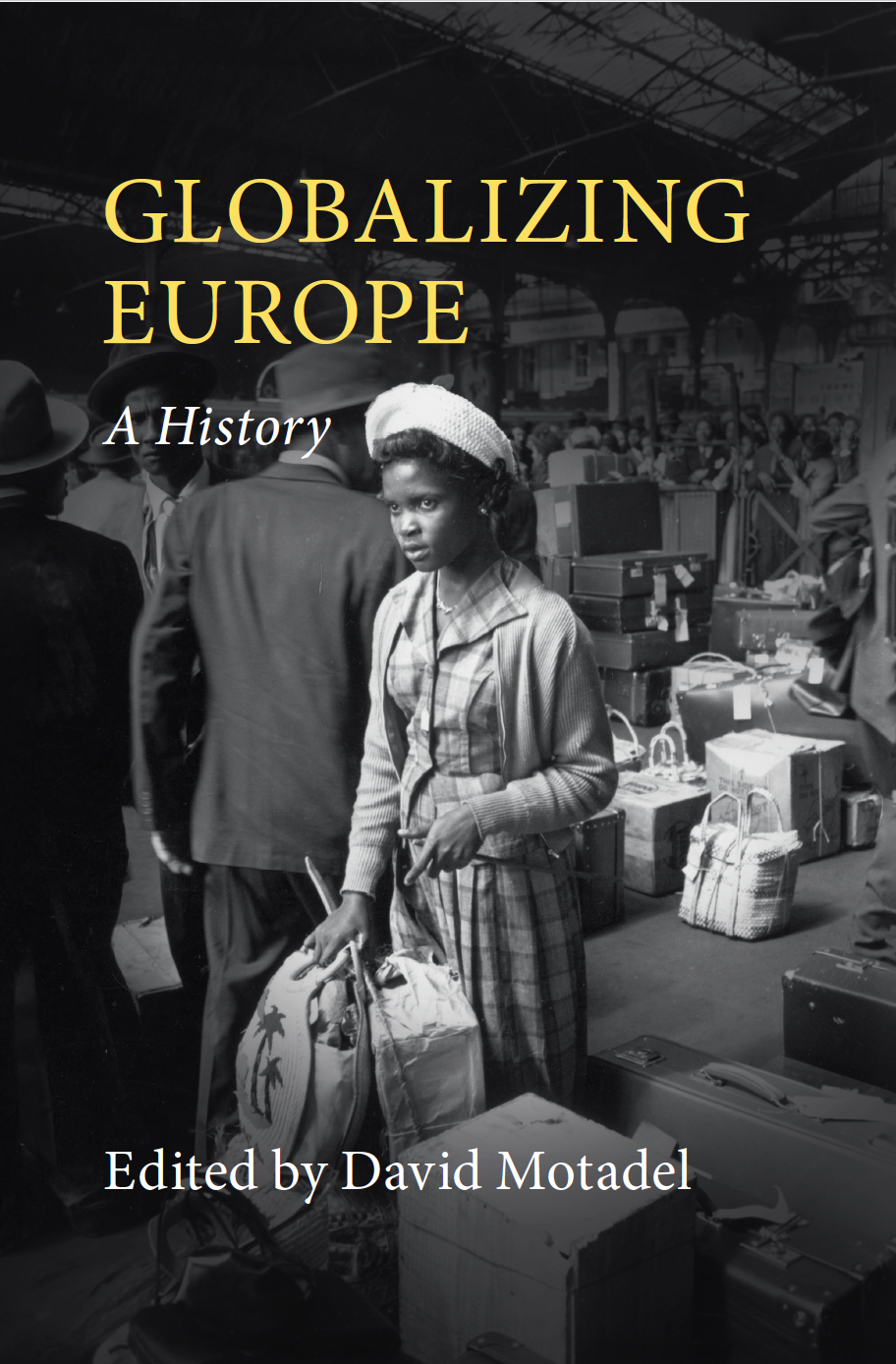
GLOBALIZING EUROPE: A HISTORY
Description
Globalizing Europe explores modern Europe’s myriad entanglements with the wider world, considering the continent not only as an engine but also as a product of global transformations. It looks at the ways in which the global movements of peoples and ideas, goods and raw materials, flora and fauna have impacted life on the continent over the centuries. Bringing together a group of leading historians, the book shows how the history of Europe can be integrated into global history. Taken together, its chapters will help reshape our understanding of the boundaries of Europe – and the field of modern European history.
Reviews
‘This collection of essays on a crucial subject manages to be at once thought-provoking, deeply learned, and engagingly written. Its authors highlight, in a delightfully wide and varied set of domains, the history of the dynamic reciprocal relations between the European subcontinent and the rest of the world. Globalising Europe offers an important corrective and challenge to still-powerful Eurocentric accounts, while powerfully suggesting how new, common frames of reference can be developed to understand the complex entanglement of European and non-European histories.’
— David Bell, Princeton University
‘This collective history is the gold standard for understanding the impact of the global turn in culture of the last three decades for the study of Europe’s past. The whole volume is elegant, learned, and probing; each essay, whether on capitalism, the environment, or religion, gender and sex, whiteness, the military, and making music argues with lively cases, telling debates, and firework displays of sources – how the continent was shaped time and again in a real and material sense by the extra-European world. Incontrovertible by the end is that in these unsettled times, Europe and other regions might seek to retreat into their ‘civilizational’ spaces and nationalist historians to do battle on behalf of the purity of their nation’s past. But there is no going back on the knowledge, so creatively demonstrated in this volume, that historically the West and the rest are deeply interconnected.’
— Victoria de Grazia, Columbia University
‘If you are interested in what a globalized European history might look like, it is hard to imagine a better place to start than this wide-ranging volume of smart, well-informed essays. The editor has assembled a dream team of contributors. From culture to commodities, migration to music, Globalizing Europe offers readers an expert and lively guide to the possibilities of history in a new key.’
— David Blackbourn, Vanderbilt University
‘This is a timely collection of reflections on Europe’s changing place in the world and in world history. Contributions range from empire to environmentalism, music to migration, and together make a strong case for deprovincializing Europe from fresh global perspectives.’
— Paul Betts, University of Oxford
‘For this project, Motadel, the volume’s editor, has assembled a group of sixteen eminent historians charting an impressive range of different fields of European history – from political to economic and military history, from the history of gender to art and migration, from intellectual to musical history…Overall, the contributions provide excellent and accessible surveys of their respective subfields, serving as valuable introductions for students as well as for professional historians seeking to familiarize themselves with major trends in areas beyond their own specialization…By highlighting Europe’s myriad interconnections with the rest of the world, the volume shows that Europe was never a self-contained province but an integral part of the world, influencing other continents while simultaneously being shaped by them.’
— Jonas Kreienbaum, H SOZ KULT – Read Review
‘The rise of global approaches presents huge opportunities to explore modern Europe as part of a globalizing world and to globalize European history…The volume’s editor rightly notes that Europe’s global entanglements have long remained marginalized in national histories and that European continental history has “traditionally been no more open”…The collection features several contributions of the highest calibre.’
— Ferenc Laczó, CEU REVIEW OF BOOKS – Read Review
‘Globalizing Europe shows us a discipline capable of questioning the old ghosts of nationalism at a time when they are once again appealing for a political and public affirmation of historical knowledge.’
— Gonçalo Rocha Gonçalves, LER HISTÓRIA (Translation) – Read Review